

Pine Mountain – Cloverdale Peak Wine Country Guide
Pine Mountain–Cloverdale Peak is a high-elevation AVA in the Mayacamas Mountains above Cloverdale, straddling Sonoma and Mendocino counties. It is known chiefly for Cabernet Sauvignon and other Bordeaux varieties grown on steep mountain sites above the Alexander Valley floor.
At a Glance
Key facts about the Pine Mountain – Cloverdale Peak AVA.
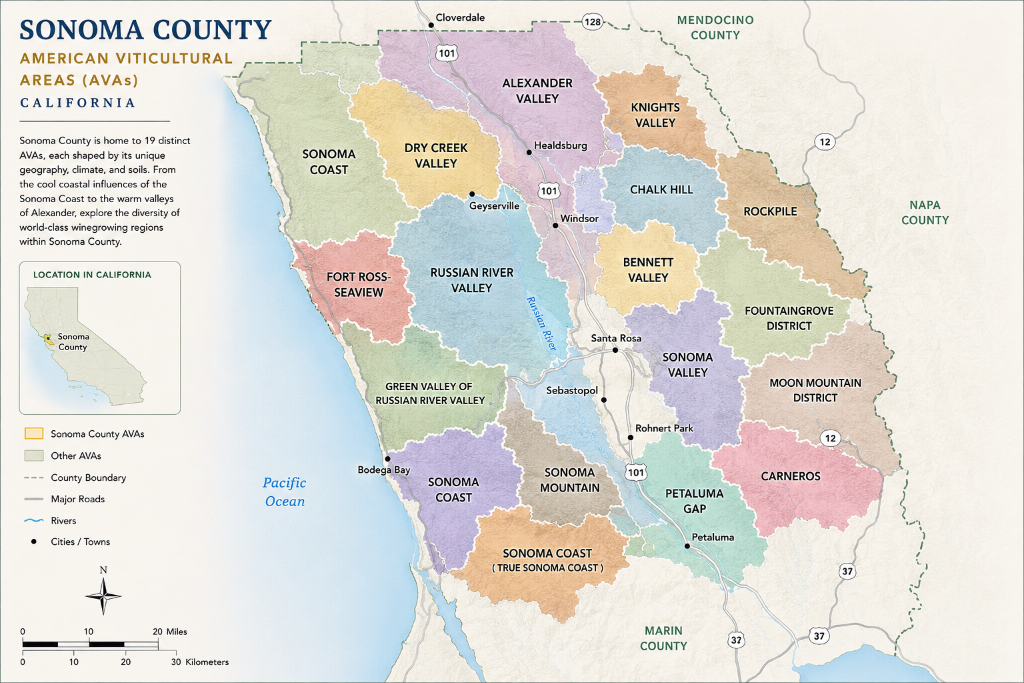
AVAs with similar characteristics and wine styles.
About Pine Mountain – Cloverdale Peak
Pine Mountain–Cloverdale Peak occupies a rugged section of the Mayacamas Mountains near the northern end of Sonoma County, with portions extending across the county line into Mendocino County. The AVA sits above Cloverdale and the Alexander Valley, beginning around 1,600 feet and rising to roughly 3,000 feet. Its vineyards are scattered across steep slopes, ridges, and forested terrain rather than arranged along a continuous tasting-room route.
Why Visit Pine Mountain – Cloverdale Peak?
Click to expand map
Why Pine Mountain – Cloverdale Peak Is One of California’s Most Famous Wine Regions
Signature Characteristics
What makes Pine Mountain – Cloverdale Peak special.
High-Elevation Cabernet Sauvignon
The AVA is best known for Cabernet Sauvignon grown well above the valley floor, where elevation, exposure, and low-vigor sites tend to produce concentrated wines with firm tannic structure.
Bordeaux Varieties and Blends
Cabernet Franc, Merlot, Petit Verdot, and Malbec are important supporting grapes, often used in blends that emphasize dark fruit, spice, and structure.
Mountain Setting Above Cloverdale
Vineyards are located on steep slopes and ridgelines in the Mayacamas Mountains rather than on valley-floor parcels, giving the area a more remote and less commercial visitor feel.
Above the Fog Line
Many vineyard sites sit above the typical fog layer affecting lower elevations, receiving strong sun exposure while retaining mountain air movement and cooler seasonal conditions than the valley floor.
Limited Tasting Infrastructure
The AVA has relatively few public-facing winery facilities. Tastings are typically by appointment, and some wines are encountered through producers based elsewhere in Sonoma County.
Towns & Areas
Charming towns near the Pine Mountain – Cloverdale Peak wine region.

Geyserville
A charming wine country town known for its laid-back atmosphere, acclaimed wineries, and scenic vineyard views.
Cloverdale
Cloverdale is a small, historic town at the northern end of Sonoma County, known for its relaxed pace, agricultural roots, and proximity to some of Sonoma's warmest wine-growing regions.

Healdsburg
An upscale wine country hub featuring world-class wineries, farm-to-table dining, and a lively downtown plaza.
Compare Nearby AVAs
Pine Mountain – Cloverdale Peak is one of Sonoma County’s most celebrated wine regions. See how it compares to other nearby AVAs to help you choose the perfect destination for your wine country trip.
Pine Mountain – Cloverdale Peak
Famous ForCabernet Sauvignon, Cabernet Franc, Merlot, Petit Verdot, Malbec

Howell Mountain
Famous ForCabernet Sauvignon, Merlot, Zinfandel
Pine Mountain – Cloverdale Peak is a high-elevation AVA located at the northern tip of Sonoma County that specializes in mountain-grown Cabernet Sauvignon with firm tannins. Howell Mountain is a historic Napa Valley sub-appellation situated above the marine layer where volcanic soils produce dense, age-worthy red wines.
Explore Howell MountainPine Mountain – Cloverdale Peak
Famous ForCabernet Sauvignon, Cabernet Franc, Merlot, Petit Verdot, Malbec

Diamond Mountain District
Famous ForCabernet Sauvignon, Merlot, Cabernet Franc, Petit Verdot
Pine Mountain – Cloverdale Peak sits at extreme elevations in the northern Mayacamas, producing concentrated fruit from some of the highest vineyards in California. Diamond Mountain District is defined by its porous volcanic soils and steep terrain, yielding robust red wines with significant aging potential.
Explore Diamond Mountain DistrictPine Mountain – Cloverdale Peak
Famous ForCabernet Sauvignon, Cabernet Franc, Merlot, Petit Verdot, Malbec

Mount Veeder
Famous ForCabernet Sauvignon, Malbec, Merlot, Cabernet Franc
Pine Mountain – Cloverdale Peak is a high-elevation AVA in northern Sonoma County characterized by intense solar radiation and thin volcanic soils. Mount Veeder is a rugged Napa Valley appellation defined by its steep sedimentary terrain and a cool, marine-influenced climate that produces powerful tannins.
Explore Mount VeederPine Mountain – Cloverdale Peak
Famous ForCabernet Sauvignon, Cabernet Franc, Merlot, Petit Verdot, Malbec

Moon Mountain
Famous ForCabernet Sauvignon, Zinfandel, Bordeaux varieties, Syrah, volcanic mountain vineyards
Pine Mountain – Cloverdale Peak is one of California's highest viticultural areas, characterized by its extreme elevation and rugged terrain in the northernmost reaches of Sonoma County. Moon Mountain is situated on the Sonoma side of the Mayacamas Mountains and is defined by its volcanic soils and historic vineyards that produce intensely structured red wines.
Explore Moon MountainPine Mountain – Cloverdale Peak
Famous ForCabernet Sauvignon, Cabernet Franc, Merlot, Petit Verdot, Malbec

Knights Valley
Famous ForCabernet Sauvignon, Merlot, Sauvignon Blanc, Bordeaux Blends
Pine Mountain – Cloverdale Peak is a high-elevation viticultural area defined by extreme altitude and rugged terrain that yields concentrated, small-berried fruit. Knights Valley is a warm, sheltered valley located between Alexander Valley and Napa Valley that is primarily known for its volcanic soils and polished Bordeaux-style wines.
Explore Knights ValleyPine Mountain – Cloverdale Peak
Famous ForCabernet Sauvignon, Cabernet Franc, Merlot, Petit Verdot, Malbec

Fountaingrove District
Famous ForCabernet Sauvignon, Syrah, Merlot, Sauvignon Blanc
Pine Mountain – Cloverdale Peak is defined by its high-elevation vineyards located above the fog line that produce tannic, concentrated red wines. Fountaingrove District features diverse volcanic soils and steep slopes that favor structured Bordeaux and Rhone style varieties.
Explore Fountaingrove DistrictCan’t decide? Explore all Sonoma County AVAs
Discover more wine regions and plan the perfect Sonoma County wine country adventure.
Featured Guides
Curated itineraries and travel guides for Pine Mountain – Cloverdale Peak.

Where to Find Sonoma County's Best Mocktails
Discover Sonoma County's most creative mocktails, from botanical zero-proof cocktails and elegant resort lounges to wineries, rooftop bars, and chef-driven restaurants redefining alcohol-free hospitality.
Travel Guide
Ultimate Sonoma Coast Getaway
Explore the best Sonoma Coast experiences for travelers who want rugged scenery, coastal lodging, cool-climate wines, outdoor adventure, and memorable local dining. This guide highlights the beaches, trails, wineries, restaurants, and places to stay that make the Sonoma Coast one of Northern California's most distinctive wine country escapes.
Multi-Day Itinerary
A Perfect Day at the Sonoma Plaza
Discover the best places around Sonoma Plaza for wine tasting, dining, history, and walkable wine country charm. This guide highlights tasting rooms, restaurants, historic landmarks, and nearby accommodations that make Sonoma Plaza one of California's most accessible and rewarding wine country destinations without needing a car.
Travel Guide
Authentic Sonoma County
Discover authentic Sonoma County experiences rooted in family-owned wineries, boutique producers, historic sites, artisan food makers, and the relaxed agricultural character that defines the region. This guide highlights places that showcase Sonoma County beyond polished wine country, from small-production tasting rooms and heritage farms to local cheese, olive oil, and cultural landmarks.
Travel Guide
Best Luxury Wine Experiences in Sonoma County
Explore Sonoma County's best luxury wine experiences, from acclaimed estates and collector-focused tastings to elegant wineries known for exceptional hospitality, vineyard settings, and limited-production wines. This guide is designed for travelers seeking polished, high-touch wine country experiences with a strong sense of exclusivity and regional prestige.
Travel GuidePlan Your Visit
Everything you need to know before visiting Pine Mountain – Cloverdale Peak.
Best Time to Visit
Spring and Fall
Transportation
Private car or hired driver is the most practical option; rideshare availability is limited and unreliable in the mountain areas.
Reservations
Required or strongly recommended, especially for estate visits and small-production producers.
Wineries Per Day
2-3
Where to Stay
Cloverdale is the closest town and offers a small selection of hotels and inns. Geyserville and Healdsburg provide more restaurants, lodging, and tasting-room options, making them practical bases for visitors combining Pine Mountain–Cloverdale Peak with Alexander Valley, Dry Creek Valley, or northern Sonoma wineries. There is little lodging within the AVA itself.
Pine Mountain – Cloverdale Peak FAQs
Common questions about visiting Pine Mountain – Cloverdale Peak.
What is the Pine Mountain – Cloverdale Peak AVA known for?
Pine Mountain – Cloverdale Peak is world-renowned for its extreme high-altitude viticulture. As one of the highest elevation grape-growing regions in California, the vineyards here sit between 1,600 and 3,000 feet above sea level, well above the fog line of the surrounding valleys. This unique positioning provides intense solar radiation and cooler daytime temperatures, which creates a distinct microclimate. Travelers and collectors prize this region for its 'mountain fruit,' specifically Cabernet Sauvignon that possesses incredible structural depth, intense color, and a sophisticated tannin profile. Beyond the wine, the area is famous for its rugged, untouched natural beauty and breathtaking panoramic views that stretch across Sonoma and Mendocino counties, offering a much more wild and secluded experience than the manicured valley floors nearby.
Is Pine Mountain – Cloverdale Peak worth visiting for a wine tasting trip?
For travelers who prefer boutique, off-the-beaten-path experiences over crowded commercial tasting rooms, Pine Mountain – Cloverdale Peak is absolutely worth a visit. It is an ideal destination for serious wine enthusiasts who enjoy high-end red wines and want to understand how elevation affects viticulture. The experience here is intimate and often requires advance planning, as many of the properties are private estates or small-scale operations. It offers a refreshing contrast to the busier corridors of Napa or Central Sonoma. However, because of its remote location and steep terrain, it is best suited for those who appreciate a bit of adventure and don't mind navigating winding mountain roads to reach some of the most exclusive and scenic vineyard sites in Northern California.
What wines and grape varieties is Pine Mountain – Cloverdale Peak famous for?
The region is a powerhouse for Bordeaux-style red varietals. Cabernet Sauvignon is the undisputed king of the mountain, accounting for the vast majority of the acreage. The thin, volcanic soils and high elevation result in smaller berries with thick skins, producing wines with concentrated flavors of dark fruit, cocoa, and spice. Aside from Cabernet, you will find exceptional Malbec, Merlot, and Petit Verdot, which are often used in high-altitude blends or bottled as robust single-varietal wines. While red wines dominate the landscape, some producers experiment with high-elevation Sauvignon Blanc or Chardonnay that exhibit vibrant acidity and flinty minerality. When visiting, travelers should prioritize tasting the Cabernet Sauvignon to truly appreciate the 'mountain character' that defines this specific Sonoma County terroir.
Where is Pine Mountain – Cloverdale Peak located and how do I get there?
This AVA is located at the northernmost tip of Sonoma County, perched high above the town of Cloverdale. It actually straddles the border between Sonoma and Mendocino counties, though it is officially part of the Northern Sonoma viticultural area. To get there, most visitors fly into Santa Rosa (STS) or drive north from San Francisco, which takes about two hours. The primary access point is via Highway 101 to Cloverdale, followed by a climb up steep, winding mountain roads like Pine Mountain Road. Because of the elevation and terrain, the drive is scenic but requires focus. It is roughly 30 minutes north of Healdsburg, making it a viable day trip for those staying in central Sonoma wine country.
How does Pine Mountain – Cloverdale Peak compare to Napa Valley?
Comparing Pine Mountain – Cloverdale Peak to Napa Valley is a study in contrasts. While Napa Valley is famous for its polished, luxury hospitality and world-class estates, Pine Mountain offers a more rugged, 'frontier' style of luxury. The wines from Pine Mountain are often compared specifically to Napa's mountain AVAs, like Howell Mountain or Mount Veeder, because they share that signature intense tannin and dark fruit profile. However, Pine Mountain is significantly less commercialized. You won't find large crowds, bus tours, or walk-in tasting rooms here. The experience is more about the raw connection to the land and the dramatic topography. If Napa is a high-end resort, Pine Mountain – Cloverdale Peak is a private mountain retreat for the true wine connoisseur.
What wineries should I prioritize when visiting the Pine Mountain area?
Because many of the vineyards in Pine Mountain – Cloverdale Peak are high-elevation sites owned by larger prestigious labels or small private estates, you have to be strategic. Capture Vineyards is a standout, known for its world-class Cabernet and Sauvignon Blanc grown at peak elevations. Pine Mountain Vineyards is another essential stop, offering an authentic look at the region's pioneering viticulture. Many visitors also seek out wines from labels like Silver Oak or Francis Ford Coppola, which source premium fruit from this AVA for their top-tier mountain designates. Since many of these producers are appointment-only or have tasting rooms in nearby towns like Healdsburg or Cloverdale, always check availability in advance to ensure you can taste these specific high-altitude wines.
What is the best time of year to visit Pine Mountain – Cloverdale Peak?
The best time to visit is during the late spring (May and June) or the fall harvest season (September and October). During the spring, the mountain is lush and green, and the temperatures are mild enough for comfortable outdoor tastings with clear views. The fall is equally spectacular as the vineyard leaves change color and the bustle of harvest brings an energetic atmosphere to the wineries. Winter can be beautiful but challenging, as the high elevation means it gets significantly colder than the valley floor, and occasional snow or heavy rain can make the mountain roads more difficult to navigate. If you visit in mid-summer, be prepared for intense sun; while it is cooler than the valley at night, the daytime solar radiation at 2,500 feet is very strong.
Where should I stay when exploring Pine Mountain – Cloverdale Peak?
The closest and most convenient home base is the charming town of Cloverdale. It offers several cozy bed-and-breakfasts and boutique inns that provide a local, small-town feel. For travelers seeking more upscale luxury accommodations, Healdsburg is only a 25-minute drive south. Healdsburg is the culinary and hospitality heart of Sonoma County, featuring five-star hotels, Michelin-starred restaurants, and dozens of tasting rooms. Staying in Healdsburg allows you to enjoy high-end amenities in the evening while making the short trek north to Pine Mountain during the day. Alternatively, for a more rustic experience, some visitors look for vacation rentals nestled directly on the mountain or in the nearby Anderson Valley to the northwest.
How many wineries can I visit in one day in this region?
Due to the geography and the appointment-only nature of the wineries, you should plan to visit no more than two or three locations in a single day. The drive up and down the mountain takes time, and the tasting experiences here tend to be more educational and leisurely than in more commercial regions. Most visitors start their day with a morning tasting on the mountain to enjoy the views before the afternoon heat, then head down to Cloverdale or the nearby Alexander Valley for a late lunch and a second tasting. Trying to rush through more than three stops would be difficult and would take away from the serene, slow-paced atmosphere that makes this AVA so special.
Is Pine Mountain – Cloverdale Peak family-friendly for travelers?
Generally speaking, Pine Mountain – Cloverdale Peak is more geared toward adult travelers and serious wine collectors. The focus here is on quiet, intimate tastings and high-elevation viticulture education. Many of the tasting sites are on working mountain ranches or private estates with steep drop-offs and rugged terrain, which may not be ideal for young children. Additionally, the long, winding drive up the mountain can be difficult for kids prone to motion sickness. While some wineries in the surrounding Alexander Valley offer more family-oriented amenities like picnic areas or lawn games, a trip up to the peak is best reserved for a romantic getaway or a group of wine-loving friends.
What other wine regions can I combine with a Pine Mountain trip?
Pine Mountain – Cloverdale Peak is perfectly positioned for a multi-AVA itinerary. It sits directly above the Alexander Valley, which is famous for its lush, valley-floor Cabernet Sauvignon. You can easily spend the morning at high altitude on Pine Mountain and the afternoon exploring the historic estates of Alexander Valley. To the west lies the Dry Creek Valley, known for world-class Zinfandel, and to the north is the Mendocino County border leading toward the Anderson Valley, famous for Pinot Noir and sparkling wine. Combining these regions allows you to experience the incredible diversity of Northern California wine, moving from the rugged mountain peaks to the sun-drenched valleys and cool coastal influences all in one trip.
Do I need to book wine tastings in advance in Pine Mountain – Cloverdale Peak?
Yes, booking in advance is essential for this region. Because the AVA is remote and comprised mainly of small, family-owned vineyards and private estates, walk-in tasting rooms are virtually non-existent on the mountain itself. Many producers only offer tastings by prior appointment to ensure they can provide a personalized experience and because they may not have staff on-site at all times. Some labels that source from the mountain may have more accessible tasting rooms in the town of Healdsburg or Cloverdale, but even those are increasingly moving toward reservation-only models. We recommend booking your visits at least two to four weeks in advance, especially if you are traveling during the peak summer or fall seasons.
What should I wear for a day of wine tasting on Pine Mountain?
Dress in layers and prioritize comfort. Even if it is a warm day in the valley, the temperature on Pine Mountain can be significantly cooler, and the wind can pick up at high altitudes. Conversely, the sun is much stronger at 2,500 feet, so sunglasses and sunblock are a must. In terms of style, 'Wine Country Casual' is the standard—think sundresses, chinos, or nice jeans paired with a light jacket or sweater. Most importantly, wear sensible shoes. Many tastings here involve walking through vineyards or standing on uneven, rocky mountain soil. Avoid high heels or thin dress shoes if you plan on taking a vineyard tour, as the terrain is often rugged and unpaved.
How does the terroir of Pine Mountain affect the taste of the wine?
The terroir of Pine Mountain – Cloverdale Peak is defined by its volcanic soil and its position above the inversion layer. On the valley floor, grapes are often cooled by fog; on Pine Mountain, they sit in the sun all day but are cooled by high-altitude breezes. This results in 'struggling' vines that produce very small, concentrated grapes. For the traveler, this translates to a wine that is noticeably more intense than a typical Sonoma Cabernet. You will taste more 'savory' notes—think graphite, dried herbs, and earth—alongside deep fruit. The tannins are also more pronounced and structural, giving the wines great aging potential. It is a more powerful, academic style of wine compared to the softer, fruit-forward profiles found in lower elevations.
Explore More Regions
View all regionsAdelaida District
The Adelaida District is a high-elevation AVA in northwest Paso Robles defined by its rugged Santa Lucia Range terrain, calcareous limestone soils, and significant maritime influence.
Alisos Canyon
Alisos Canyon is a 5,774-acre AVA in Santa Barbara County, established in 2020. It is defined by its position between the Santa Maria Valley and the Santa Ynez Valley, specializing in concentrated Syrah and Rhone-style wines grown on sandstone and shale soils.

Atlas Peak
Atlas Peak is a high-elevation Napa Valley AVA on the western slopes of the Vaca Range, east of the city of Napa. It is best known for mountain-grown Cabernet Sauvignon from volcanic, well-drained sites above much of the valley fog.
Ballard Canyon
Ballard Canyon is a small, north-south oriented AVA in the Santa Ynez Valley of Santa Barbara County. It is specifically recognized for its focus on Syrah and other Rhône varieties grown in a transitional climate.

Calistoga
Calistoga is Napa Valley’s northernmost AVA, centered on the town of Calistoga and shaped by a warm valley-floor climate with strong nighttime cooling. It is best known for structured Cabernet Sauvignon, ripe Zinfandel, and smaller plantings of Syrah, Petite Sirah, and Charbono.

Carneros
Los Carneros is the cool, bay-influenced AVA at the southern end of Napa and Sonoma, known for Chardonnay, Pinot Noir, and sparkling wine. Fog, wind, and a long growing season give its wines higher acidity and more restrained fruit than much of inland Napa Valley.

Chiles Valley District
Chiles Valley District is a small, rural AVA in the eastern hills of Napa Valley, known mainly for Cabernet Sauvignon, Zinfandel, and other mountain-influenced red wines. Its higher elevation, cooler nights, and relative isolation distinguish it from the warmer, more developed Napa Valley floor.

Coombsville
Coombsville is a cool, maritime-influenced Napa Valley AVA east of the city of Napa, best known for Cabernet Sauvignon and Bordeaux varieties with freshness, structure, and restrained fruit. Its rolling volcanic hills and proximity to San Pablo Bay distinguish it from warmer up-valley Cabernet districts.

Curated by Wine Country Experts
Our guides are written by local wine experts and updated regularly to ensure you get the most accurate and helpful information for your wine country adventure.
Guest Reviews
We analyze thousands of verified guest reviews to understand real experiences and consistent satisfaction.
Booking Popularity
We evaluate booking and reservation trends to spot the most sought-after places and experiences.
Regional Significance
We prioritize businesses that represent the unique character, heritage, and communities of Sonoma County.
Wine Quality
Our team looks for outstanding wine programs, high-quality offerings, and recognition from trusted industry sources.
Local Expert Recommendations
Our local experts personally visit and vet each recommendation to ensure it meets our standards.
Trusted. Local. Unbiased.
We do not accept payment from businesses for placement. Our recommendations are independent and always focused on helping you have exceptional wine country experiences.